
Seeking greener pastures by a whisker: A reminder from Fisayo Soyombo
Europe by road used to be a thing we casually talked about on the streets because for many of us, it felt like another rumour hearing names of places like Agadez and Gatrun, you wonder, where on the map those places exist. Then, the stories gathered momentum and became popular during the Obasanjo era with Titi Abubakar's Women Trafficking and Child Labour Eradication Foundation (WOTCLEF) and the advocacy work of Mrs. Eki Igbenedion, former First Lady of Edo State. There was a whole series back then on this issue on local TV stations (I can't remember the name of the series now). We grew up thinking only people from the Edo State axis had the guts to embark on such a perilous journey...as per "na only Bini people like to take that risk".

Over time, it became clear that Nigerians from all over the country attempt this deadly journey in search of greener pastures in a bid to reach Italy. In 2026, the journey to Italy through the Sahara has now morphed into young ladies from Nigeria moving to Arab countries as Shagalas. As much as their Shagala routes are not deemed "illegal" relative to those who use the Kano-Niger-Libya-Europe route (since their agents provide them with legal travel documents to those countries), the perils of the journey have striking similarities (you can find shagala videos on TikTok).
Before Fisayo's recent daring investigative journalism journey on the Libya-Italy route, there was Òlòtūré? (another movie inspired by another journalist's journey), which left the viewers with more questions. Note that there are tons of videos online and clips on social media, especially TikTok (namely Italian Davido's page), where survivors and people stuck at different stages of this journey break down their experience. What strikes me is how much Fisayo's experience as narrated in his 3-part feature is similar to the tales shared by these immigrants on this journey.
The Libyan route is NOT used by Nigerians alone. As Fisayo confirms, echoing information provided by other publications and clips online, you will find people from different parts of Africa on this perilous journey. Same as the Darién Gap, which is not used by only South Americans seeking greener pastures and escaping violence and extremely harsh economic conditions, even though there are reports from 2025 that the route has now been closed. Immigration and the search for greener pastures are not monopolized by a single race, gender, or people from specific parts of the world. Immigration has been a thing from the beginning of time, long before there were national boundaries.
Fisayo Soyombo made it back and out, hanging on to what he described as a severely battered psychological health to share his experience, like many who also survived, and they are now at the forefront of dissuading people to avoid the dangerous immigration route, which in some cases is deemed illegal.
The Road to Europe Runs Through Libya, and Few Escape Unscathed
One man fled fighting in Darfur in 2023 and crossed into Libya overland through Chad. He knows what awaits him. He knows the crossing to Europe is dangerous and that Libya is as perilous as Sudan. His question to himself is the one that drives much of modern migration: "where will I go?" Hundreds of thousands of people are asking it. The International Organization for Migration identified at least 928,000 migrants in Libya between August and October 2025, many hoping to stay and many hoping to cross to Europe.
A Country Turned Corridor
Libya was once mainly a destination for migrants seeking work. That changed with the violence that followed. Since the onset of civil war in 2014, Libya has increasingly become a place migrants pass through on their way to Europe. Multiple conflicts have wrecked the country since the removal of Muammar Gaddafi in 2011, and it has gained a notorious reputation among migrants. The danger begins long before the border. Migrants entering from the south must cross the desert. One observer described the route through Niger and Chad as a deadly passage that receives little attention, where the sand quickly covers the bodies of the dead.
Captured for Ransom
Inside Libya, the threats multiply, as Fisayo confirms in his experience. Migrants face kidnapping, exploitation, and torture by smugglers, traffickers, armed groups, and staff at detention centers. The abuse of immigrants kidnapped on this route is also alleged to be a full-blown business. Kidnapped either by being tricked by the traffickers who double as sponsors or unwillingly on the specific route used. A University of Navarra analysis describes how militias running the Al-Mabani camp extorted migrants from across Africa, demanding payment for their departure. Libyan authorities announced its closure in 2022, but the practice it represented has not disappeared. The scars are physical and psychological. Teenagers like every other migrant on this route bear marks of scars all over their bodies from a beating with sharp objects during weeks in captivity. A medical worker told AFP that survivors often suffer fear, sleeplessness, flashbacks, anxiety, and depression.
The routes also keep adapting. Since 2020, a semi-formal entry system through eastern Libya has become the backbone of a corridor carrying Bangladeshis toward Italy or Greece. Many arrive believing they hold valid work permits. Some are detained and then face ransom demands, and some smugglers even stage kidnappings to extort more money.
The Sea Beyond
For those who survive Libya, crossing the Mediterranean Sea is next. Fisayo made it to Libya, declining to cross the sea but deciding instead to activate his evacuation plan back to Nigeria through Cairo. The Central Mediterranean has long been considered the deadliest migration route in the world, with nearly 2,500 people dead or missing in 2023, according to the IOM. Smugglers in Libya often set migrants adrift in overcrowded, unseaworthy boats. In 2023, hundreds died when the fishing trawler Adriana, carrying migrants from Libya to Italy, sank off Greece.
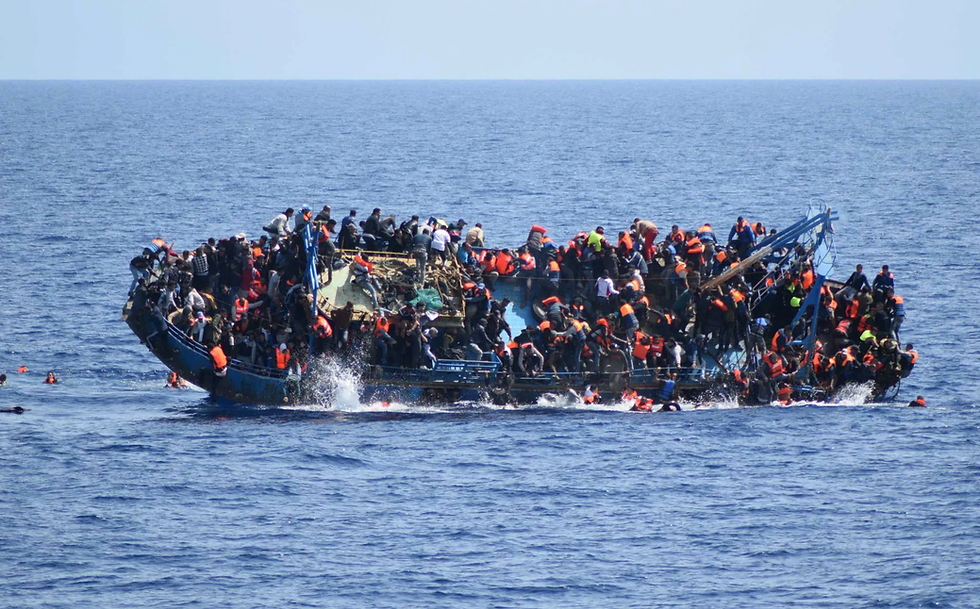
The map of departures is shifting. Frontex data show that in 2023 more than 62 percent of Central Mediterranean crossings left from Tunisia, with the remainder departing from Libya. More recently, a surge in crossings from Libya to Crete has alarmed Greece, which has announced plans to send warships to international waters.
Deterrence and Its Limits
European governments have largely answered with deterrence. The European Union and its member states have increasingly backed efforts by the Tunisian and Libyan coast guards to intercept migrants, rather than supporting protection initiatives such as search and rescue. Rights advocates dispute the approach. Human rights defenders have criticized Libya's border securitization as ineffective at stopping migrants from reaching Europe. The testimony of those on the road suggests why. Despite the known risks and mounting evidence of abuse, migrants continue to trek toward Europe. A young Senegalese migrant put it plainly to AFP: "We know it's dangerous. But we want to join Italy."

That sort of reasoning is repeated across thousands of journeys in the scorching heat of the Sahara Desert and the treacherous Darién Gap route connecting North and South America. Poverty and survival remain the top motivations for the thousands who risk their lives every year with no guarantee of completing the journey or guarantee of getting a long-term legal stay in Europe.
For people fleeing war, poverty, or persecution, the dangers of Libya are weighed against the dangers of home, and the road north still wins. Until alternatives exist, the deserts, detention centers, and open water will keep claiming lives.


Comments